


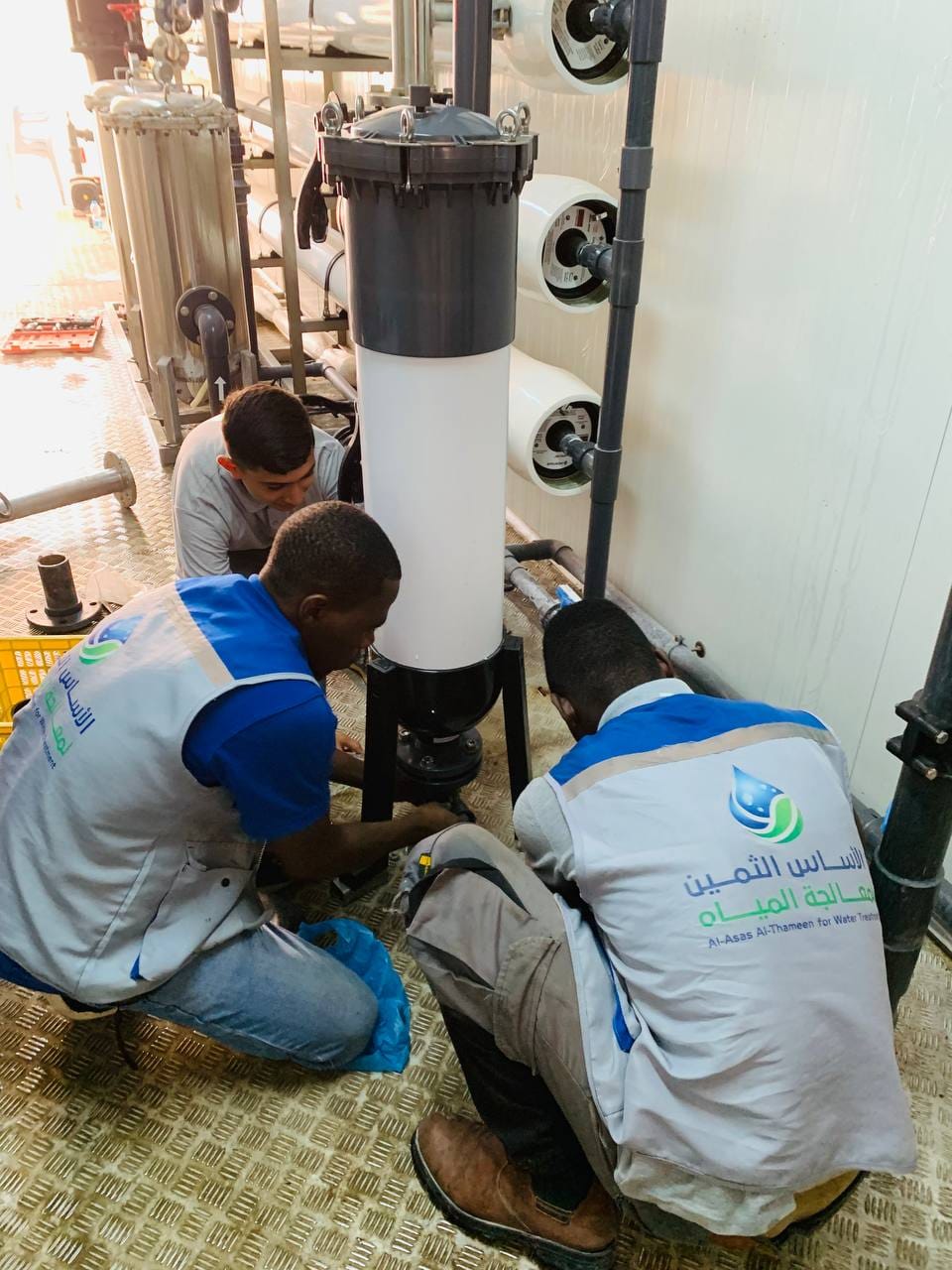
An RO plant serving a large industrial-commercial facility in Libya stopped completely after well-water turbidity jumped fivefold — here is the rescue and the permanent fix.
What caused the sudden shutdown?
The facility’s management reported that the desalination plant had stopped completely. The ALS technical team was on site the same day for a full inspection.
The inspection showed that the direct cause was a rise in differential pressure across the first-stage cartridge filter due to complete blockage, which triggered the plant’s protection system to shut it down automatically and protect the membranes. Tracing the root cause, we found that the turbidity of the raw well water had risen to about five times its usual level — a filtration load far beyond the capacity of the first treatment stage.
How did the team handle the emergency?
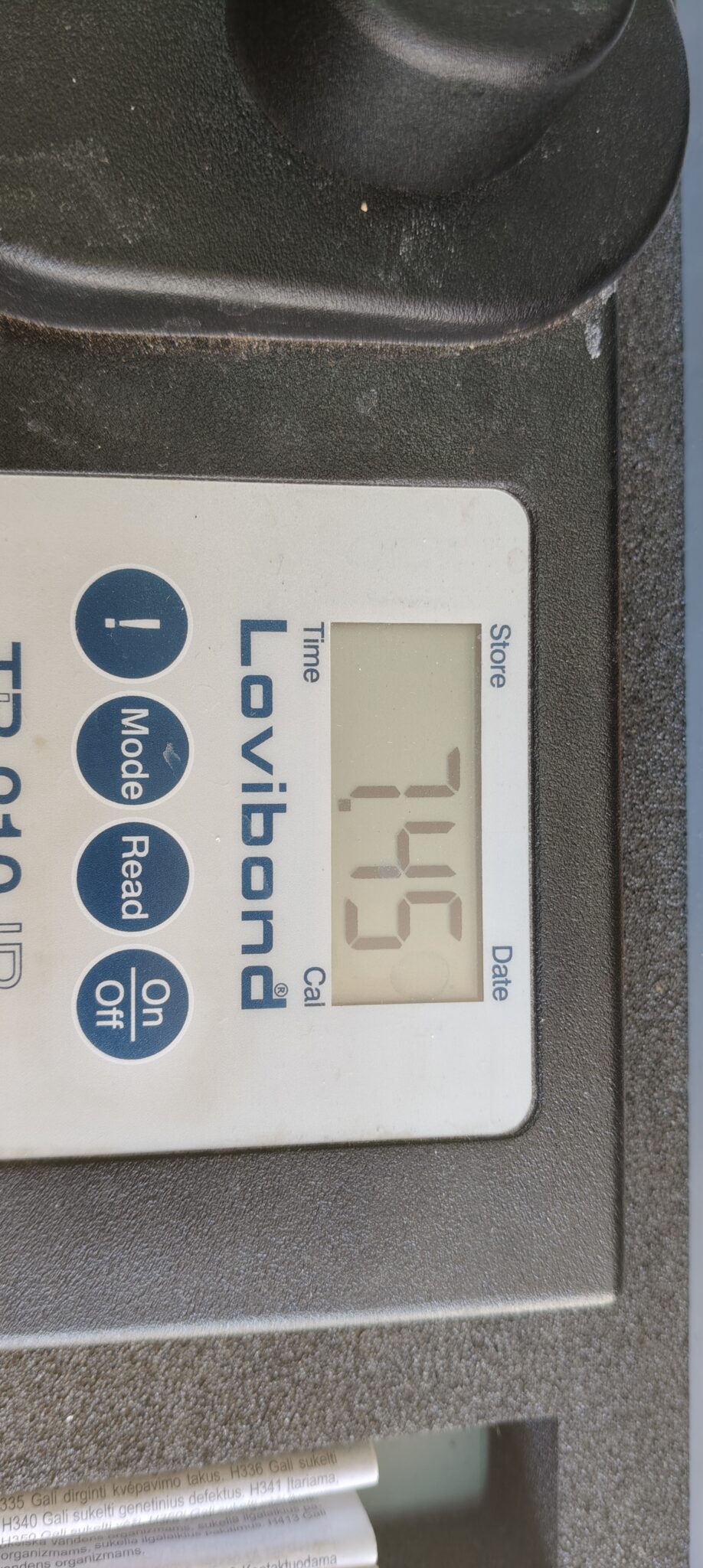
To restart the plant as quickly as possible and not leave the facility without water, the team disabled differential-pressure monitoring temporarily only, as an emergency measure.
Why is a bag filter the first line of defence against high turbidity?
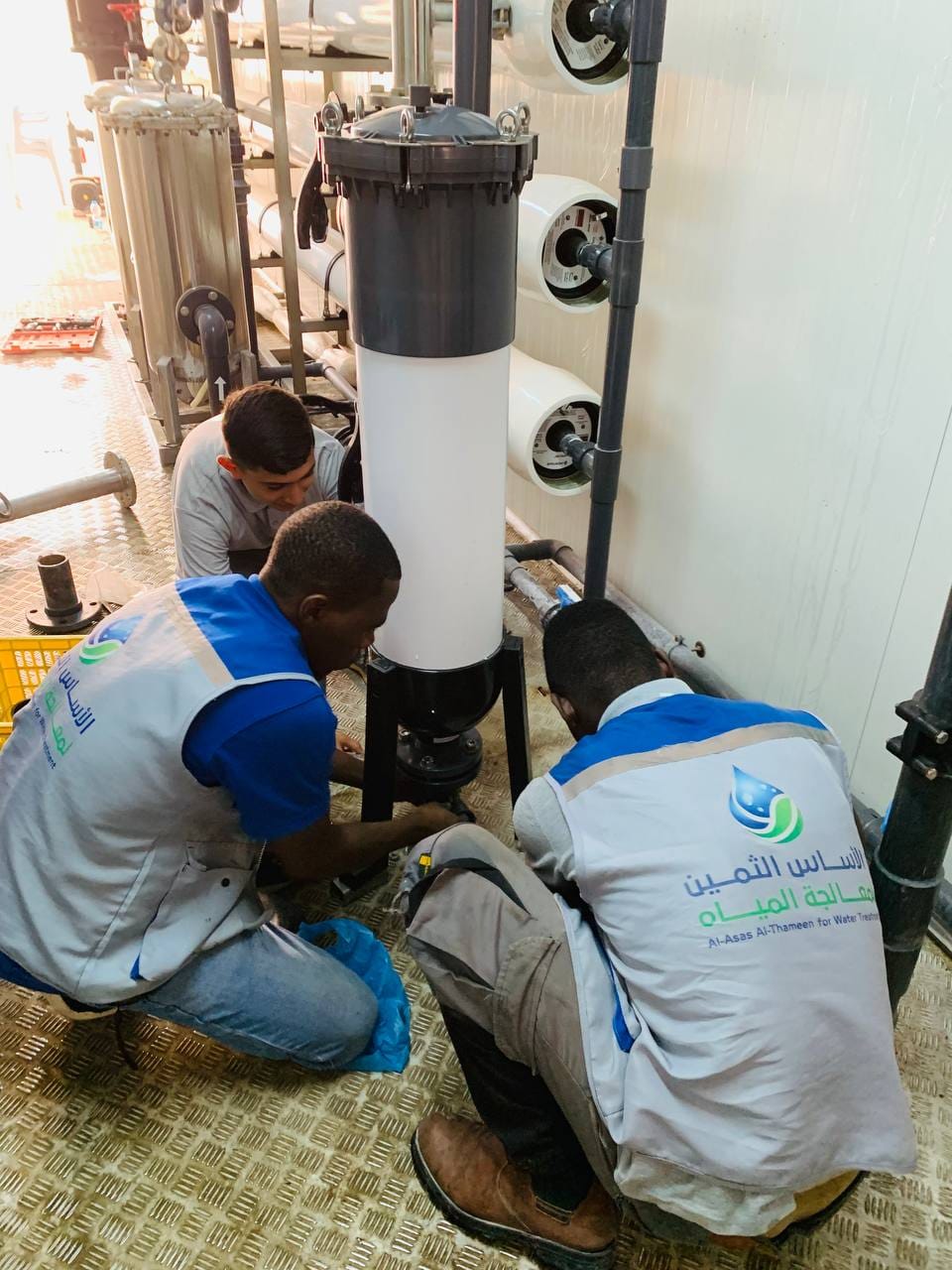
The team recommended installing a bag filter directly upstream of the cartridge filters, with the following specification:
- 20-micron filtration rating
- Washable, reusable bags (fewer replacements)
- PVC housing instead of stainless steel, for better corrosion resistance in high-turbidity water
This step directly reduces the load on the cartridge filters, extending their service life and replacement interval. It is usually the lowest-cost engineering answer to fluctuating well-water turbidity at sites where source quality cannot be controlled.
When should sand-filter media be replaced?
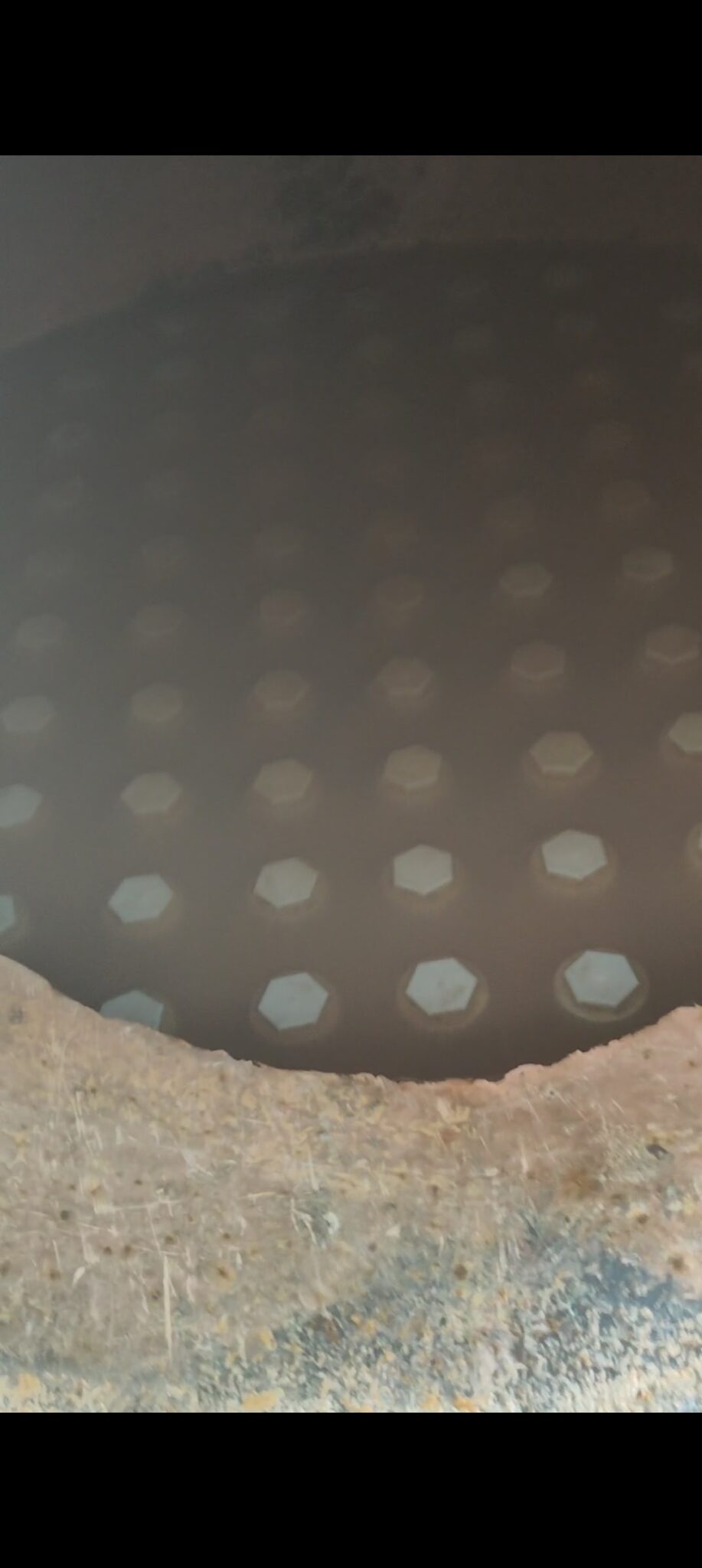
The inspection showed that the media in all three sand filters had exceeded six years of actual service — an expected lifetime that calls for full rehabilitation, especially given increased silt in the well water (suggesting partial clogging inside the media layers and reduced filtration efficiency). A previous fault in the air vent valve had also contributed to the drop in performance.
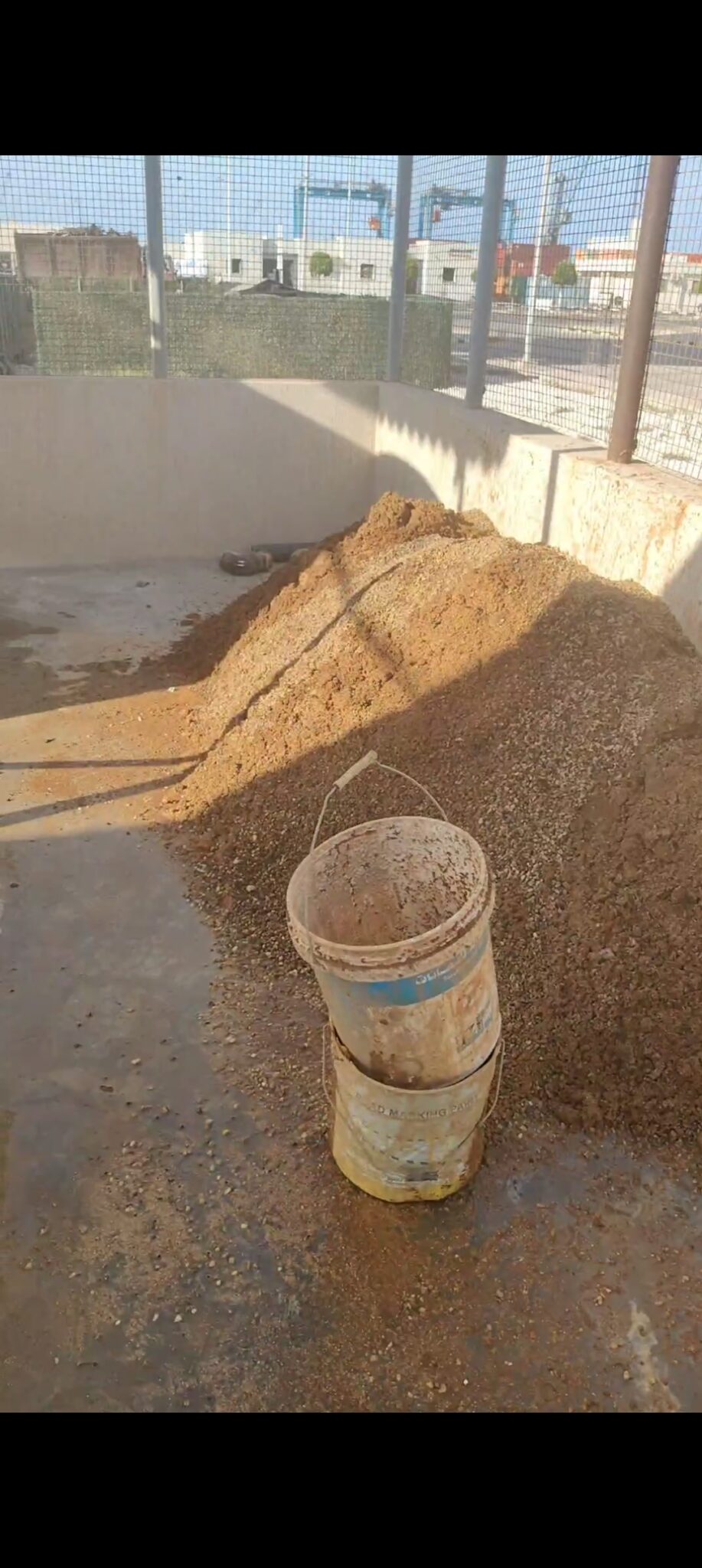
The table below summarises the recommended media for the three filters:
| Filter | Proposed media | Main function |
|---|---|---|
| Filter 1 | High-grade recycled glass media + supporting gravel layer | High filtration efficiency, less backwash water, faster recovery of performance |
| Filter 2 | Multimedia filter: glass media + activated carbon | Better removal of suspended and organic matter, better feed-water quality |
| Filter 3 | Specialised media for iron and hydrogen sulfide (H₂S) removal | Extra protection for RO membranes against deep-well contaminants |
What about the RO membranes and piping?
The team also recommended a full chemical cleaning programme for the RO membranes, including an acid clean to remove inorganic scale and an alkaline clean to remove organic and biological fouling — to restore membrane performance, lower differential pressure and extend membrane life.
Separately, pitting corrosion and leaks were found in the stainless-steel lines. The recommended fix: replace them with German-made 2.5-inch PPR lines, rated for high operating pressures with excellent corrosion resistance — noticeably reducing future maintenance compared with stainless steel in high-salinity or high-turbidity water.
Why re-analyse the well water regularly?
The team recommended a new full analysis of the well water, focusing on ferrous iron (Fe²⁺), ferric iron (Fe³⁺), total iron, silica and hydrogen sulfide (H₂S). The aim is to choose filter media that match the actual water quality and protect the plant in the long term. Source quality can change without warning — as happened here with the fivefold rise in turbidity — and a plant designed on old water data becomes prone to repeated failures.
Lessons for desalination plant owners
| Root problem | Impact if left untreated | Engineering solution |
|---|---|---|
| No pre-filtration for turbidity swings | Repeated cartridge-filter blockage and sudden shutdowns | 20-micron bag filter upstream of the cartridge filter |
| Sand-filter media past their service life | Lower filtration efficiency and extra load on the membranes | Full rehabilitation every 5–7 years depending on source quality |
| Stainless-steel lines in a corrosive environment | Leaks and pitting that threaten continuous operation | Replacement with corrosion-resistant German PPR lines |
| No regular analysis of source water | Pre-treatment design no longer matches the water | Regular full analysis (iron, silica, H₂S) and media adjusted accordingly |
Frequently asked questions
Is disabling differential-pressure monitoring safe in the long term?
No. It is an emergency step to restart the plant only, and must be followed immediately by the permanent protection measures (bag filter, media rehabilitation) to avoid repeated failures and membrane damage.
How often should well-water turbidity be checked?
Regular checks are recommended, especially at sites relying on deep wells whose quality may change with groundwater level or season. Regular checking is what revealed the fivefold jump in turbidity here before it caused a complete stop.
Why is PPR better than stainless steel in this case?
Stainless steel performs well in many environments, but it is prone to pitting corrosion in water with high salinity, turbidity or mineral content. German PPR lines rated for high operating pressures offer better corrosion resistance in exactly these conditions, with lower future maintenance cost.
Is this type of failure common in desalination plants in Libya?
Yes. Fluctuating well-water quality (turbidity, iron, hydrogen sulfide) is one of the most frequent causes of sudden shutdowns in the plants we follow in the field. Plants designed with flexible pre-filtration and regular source-water analysis are the least exposed.
Facing repeated shutdowns or fast filter clogging at your plant?
The ALS technical team carries out site inspections and water analyses to diagnose the root cause — not just the symptoms. WhatsApp: +218 930 778 375 · Phone: +218 918 444 575
Field case study prepared by the technical team of Al-Asas Al-Thameen for Water Treatment (ALS) — founded 2013, Libya. Site and client details have been withheld to protect client confidentiality.